
Ever stared at a wall of hiking boots and thought: Do I go mid or low? Don’t worry, you’re not alone. Choosing hiking boots can feel like picking your Hogwarts house – you want to get it right because you’re stuck with them for every adventure.
The debate of mid vs low hiking boots is one of the first choices hikers face. Each style comes with pros and cons, and your comfort on the trail often depends on making the right call.
Simply put: “Choosing between mid vs low hiking boots depends on comfort, terrain, and personal hiking style.” Pick the wrong type, and you might end up with sore ankles, wet socks, or the dreaded blisters that make every step feel like medieval torture.
Let’s break down what makes each style different, how to decide between them, and some popular options hikers swear by.
What Are Mid Hiking Boots?
What are mid hiking boots?
Mid hiking boots are designed to cover and support your ankle. They’re taller than low-cut hiking shoes but not as bulky as full mountaineering boots. Think of them as the “middle child” – stable, protective, and dependable.
Pros of mid hiking boots:
- Provide ankle support on rocky or uneven terrain.
- Offer better protection against mud, snow, and water splashes.
- More durable and stable for backpacking or multi-day treks.
- Great for carrying heavier backpacks.
Cons of mid hiking boots:
- Heavier than low-cut shoes, which can slow you down.
- Less breathable, so feet may get warmer in summer.
- Require more time to break in compared to lighter shoes.
If you’re hiking on trails that resemble rocky obstacle courses or carrying a heavy pack, mids are often the safer choice.
What Are Low Hiking Boots?
What are low hiking boots?
Low hiking boots – often just called hiking shoes – cut below the ankle. They look similar to trail runners but with sturdier soles and more durability for rugged terrain.
Pros of low hiking boots:
- Super lightweight, making them easier to move quickly.
- Excellent breathability, keeping feet cool on hot trails.
- Short break-in period – they’re usually comfortable right out of the box.
- Perfect for day hikes, well-maintained trails, and fastpacking.
Cons of low hiking boots:
- Minimal ankle support, which can lead to twists on uneven ground.
- Less water resistance – splashes and deep puddles are a problem.
- Not ideal for snow or extreme winter conditions.
If your hikes are mostly day trips, dry weather, or you love moving fast and light, lows might be your perfect match.
Mid vs Low Hiking Boots – Key Differences
Mid vs low hiking boots: what’s the difference?
Here’s a quick comparison for when you’re standing in the gear aisle, scratching your head:
| Feature | Mid Hiking Boots | Low Hiking Boots |
|---|---|---|
| Ankle Support | High – stabilizes on rocky terrain | Minimal – more freedom, but higher risk of twists |
| Weight | Heavier | Lightweight |
| Breathability | Moderate | High |
| Durability | Very durable | Good, but lighter build |
| Best Use | Backpacking, snow, tough trails | Day hikes, dry trails, fastpacking |
In short: mids are about support and protection, while lows are about speed and comfort.
How to Choose Between Mid and Low Hiking Boots
How to decide which hiking boot style is right for you?
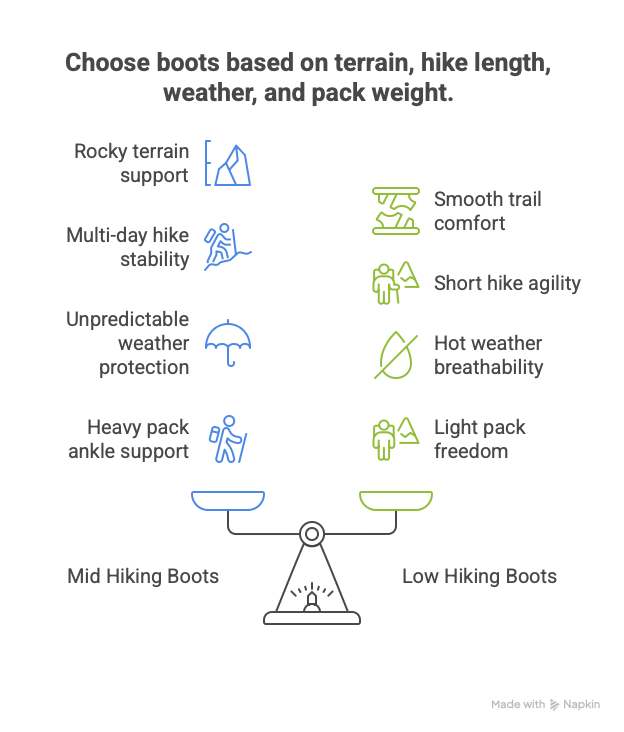
When you’re deciding between mid vs low hiking boots, consider these factors:
- Terrain:
- Rocky, uneven, or mountainous? Go mid.
- Smooth trails or desert paths? Low is fine.
- Hike length:
- Multi-day or carrying a heavy pack? Mid.
- Short day hikes? Low works well.
- Weather:
- Snow, rain, or unpredictable conditions? Mid.
- Hot summer hikes? Low.
- Backpack weight:
- Heavy pack = more ankle support = mid.
- Light pack = low is usually enough.
- Personal preference:
Some hikers hate the restriction of mids, others feel “naked” in lows. Try both in a store to see which feels better.
👉 If you’re unsure, check out our guide on how hiking boots should fit – the complete guide for happy feet on the trail. A good fit matters more than height.
Examples of Popular Mid and Low Hiking Boots
Great examples of mid and low hiking boots
This isn’t a “best of all time” list, but here are some well-loved models hikers often choose:
Mid options:
- Merrell Moab 3 Mid Waterproof – affordable, cushioned, and versatile.
- KEEN Targhee 3 Mid – roomy toe box, waterproof, and durable.
Low options:
- Salomon X Ultra 4 GTX Low – lightweight, stable, and waterproof.
- Altra Lone Peak Hiker – zero-drop, FootShape toe box for natural comfort.
Each has its strengths, and all are reliable starting points depending on your hiking style.
FAQs – Mid vs Low Hiking Boots
Are mid hiking boots better than low ones?
Not always – mids are better for tough terrain and heavy packs, but lows are more comfortable for light, fast hikes.
Can I use low hiking boots for backpacking?
Yes, but only if your pack is light. If you’re hauling lots of gear, mids give safer ankle support.
Do mid hiking boots prevent ankle injuries?
They reduce the risk, but nothing guarantees you won’t twist an ankle. Strong leg muscles and trekking poles help too.
Which type lasts longer, mid or low hiking boots?
Mids are usually more durable because of sturdier construction, but it depends on the brand and trail conditions.
Are low hiking boots just trail running shoes?
Not exactly. They look similar but have tougher soles, more grip, and better durability for rugged trails.
Wrap-Up
At the end of the day, the mid vs low hiking boots debate doesn’t have a one-size-fits-all winner. It’s about matching your boots to your trail and hiking style.
- Choose mid hiking boots if you need ankle support, stability, and all-weather protection.
- Go for low hiking boots if you want lightweight speed and breathability for day hikes.
The key is comfort. If your feet are happy, you’ll enjoy every mile instead of counting blisters. So try both styles, see what feels best, and get ready to hit the trail with confidence.
Because whether you’re team mid or team low, the right boots make every adventure better.